
 “For God so loved the world that he gave his only begotten Son, that whosoever believed in him should not perish, but have everlasting life.” (John 3:16)
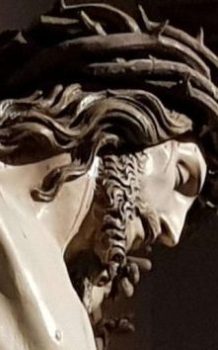
How appropriate then it is to contemplate the beginning of the greatest mystery ever written with renewed fervor as we prepare our hearts for Christ’s birth this Christmas. Had Jesus not entered the world as a human being, no person could have been redeemed. His death on the cross was required for mankind to gain eternal life. This, in short, is the message of the coming of Christ and the core essence of redemption.
We must briefly pause at the thought of original sin. In God’s eyes, the fallen human condition was pitiful – the trespass so grave that it could have only been atoned by the suffering and death of Jesus, our Lord. No other form of recompense would have sufficed to elevate the human soul into a state of regained perfection. Had God not intervened by giving up a part of his Being, we, the fallen people, would have remained lost for all eternity – being unable to break the shackles of sin and incapable to ever attain our predestined state of spiritual excellence.
No other earthly gift could have achieved what Christ’s mission achieved for the glorification of mankind.
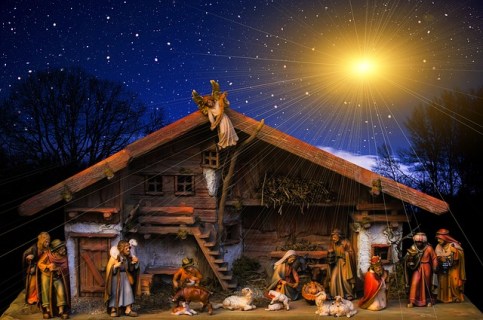
Christmas, a time when the Scriptures became alive in proclaiming the Good News that Emmanuel is among us, is thus the beginning of our hope – the ushering in of a new era. Jesus chose poverty in entering this world. Why has the King of kings so decided? He could have opted for a “royal descent”, yet he did the exact opposite. By doing so he made clear, from the very beginning, that his mission is not only of a unique nature, but of a very particular purpose. Jesus bowed to the afflicted, the sick, the outcast and the forgotten. Through them he wanted to convert the arrogant, the mighty, the self-righteous and the unjust. He became man so as to save souls at risk of perdition, wherever they were, in whatever number and in whichever lamentable state of existence. His mission was that of universal healing, and not one of global grandstanding. His calling was that of transforming human hearts, and not one of seeking public approval.
Before we are to see Jesus face to face, it remains a mystery to all why the Son of God did not spare himself the agony of atoning for our sins. We can rightfully assume that he did not want to see our lives wasted, as we are created in His likeness. Had he accepted such a fate, he would have namely also given up on some elements of himself, inasmuch as he is – intrinsically – part of every human being. Since death has no power over God, the very thought that God would allow certain fibers of him to be cast into shadow is unthinkable. Whatever the Almighty creates in his image carries his eternal imprint; so getting rid of our sins by the sacrifice Jesus offered – and thus freeing us from eternal condemnation – became the only viable option to correct our failing. Pure love – as God is defined – corrects all wrong. It does so with the outpouring of love; and as Jesus himself repeatedly said, there is no greater love than giving up one’s life for the sake of others. Precisely because of this make-up of the Devine, there was no other way to heal the world but through redemption.
This is why Christ was born into this world. This is why we celebrate Christmas.
But even God’s brilliant design would not have come to pass had Mary, the Mother of God, not freely accepted her role as co-redemptrix. Had she decided against God’s plan, which in theory remained possible, there would be no Christmas – as we know it – to celebrate, no hope and jubilant news to proclaim. We received the gift of Christmas because of Mary’s eternal wisdom, and because of God’s sensitivity to invite Jesus’s Mother into his mission of redemption. God could have done everything by himself, but he wanted our participation – through Mary – when fulfilling the prophecies of the Scriptures. This is then the vision of a loving, humble, most sensitive God; the sight of a Supreme Authority that changes the face of the world with compassion, inclusiveness and forgiveness.
Before Christ’s birth, generations anxiously awaited the coming of the Messiah. They passed away hoping his earthly presence would manifest itself soon. Some 2ooo years ago the prophecy of old became flesh, and since then the good news of Christ’s coming is known to mankind – imprinted in the hearts of his followers. This knowledge will endure until the end of time, when Jesus will reappear in his glorified presence and make everything new.
We thus celebrate Christmas in memory of this holy event. It is worth remembering that Christmas does not have to be confined to one particular day of the year. The feast of the coming of Christ can be observed every day, every single moment in time when God, freely invited, enters into a person’s heart – to cleanse it from guilt and torment, and to purify it for a loving encounter with the Creator of life.
 FAITHBOUND