In God We Trust

pexels-photo-3684345

In God we trust, for He exists in the holy triad of creation, restoration, and redemption. There is no life without Him having willed it. Someday, we will all fall asleep, forevermore. Only God can raise us from the ashes; only He can make, what is barren, whole again.

In God we trust, for He is the author of unending love, the composer of divine wisdom, the prince of merciful peace. All creation springs forth from the sound of His word, from the mighty power of Heaven’s voice.
While the splendor of the Almighty is in the realm of the unseen, the world – His brilliant work – is manifestly present and envelops the ages; nothing is outside the scope of His majestic reach. He can be derided, but not ignored; he can be vilified, but not made unloved; he can be crucified, but not replaced.

In God we trust, for His making is perfect – in total unity with the essence of profound goodness. Awesome is the architecture of life – in worldly miniature as in the appearance of grand design. No other state of existence can be envisioned in a more accomplished fashion. Everything so complete in itself is beautifully aligned with the forces of nature and the cycles of time.

In God we trust, for unsurpassed is His righteousness.
Mankind’s reprimand, to the extent required, is deserving and just.
Not for the sake of punishment does He allow the world to suffer, but as atonement for sins committed against His holy will.
He desires our purification, as we cannot partake in the kingdom of unblemished bliss without dignity, cleanness and self-worth.

In God we trust, for His knowledge is boundless, never diminished.
Always steadfast, protective, and firm is the hand of the Lord – for those who seek it. At no time does He cast aside human hearts yearning for truth, justice, and peace. His consolation is unfailingly tender, as people long for grace and forgiveness. Our God is there in the most consequential of times: when we give up on earthly desires and are poised to clothe ourselves in garments of holiness.

The Coming of Christ

“For God so loved the world that he gave his only begotten Son, that whosoever believed in him should not perish, but have everlasting life.” (John 3:16)

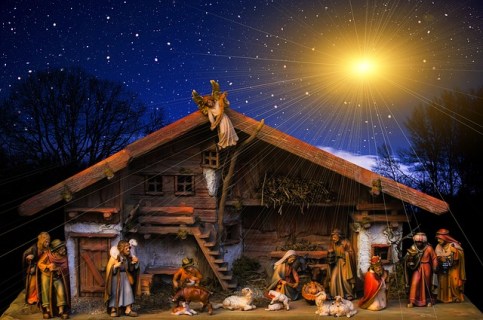
How appropriate then it is to contemplate the beginning of the greatest mystery ever written with renewed fervor as we prepare our hearts for Christ’s birth this Christmas. Had Jesus not entered the world as a human being, no person could have been redeemed. His death on the cross was required for mankind to gain eternal life. This, in short, is the message of the coming of Christ and the core essence of redemption.

We must briefly pause at the thought of original sin. In God’s eyes, the fallen human condition was pitiful – the trespass so grave that it could have only been atoned by the suffering and death of Jesus, our Lord.  No other form of recompense would have sufficed to elevate the human soul into a state of regained perfection.  Had God not intervened by giving up a part of his Being, we, the fallen people, would have remained lost for all eternity – being unable to break the shackles of sin and incapable to ever attain our predestined state of spiritual excellence.

No other earthly gift could have achieved what Christ’s mission achieved for the glorification of mankind.

Christmas, a time when the Scriptures became alive in proclaiming the Good News that Emmanuel is among us, is thus the beginning of our hope – the ushering in of a new era. Jesus chose poverty in entering this world. Why has the King of kings so decided?  He could have opted for a “royal descent”, yet he did the exact opposite.  By doing so he made clear, from the very beginning, that his mission is not only of a unique nature, but of a very particular purpose.  Jesus bowed to the afflicted, the sick, the outcast and the forgotten.  Through them he wanted to convert the arrogant, the mighty, the self-righteous and the unjust. He became man so as to save souls at risk of perdition, wherever they were, in whatever number and in whichever lamentable state of existence.  His mission was that of universal healing, and not one of global grandstanding.  His calling was that of transforming human hearts, and not one of seeking public approval.

Before we are to see Jesus face to face, it remains a mystery to all why the Son of God did not spare himself the agony of atoning for our sins. We can rightfully assume that he did not want to see our lives wasted, as we are created in His likeness.  Had he accepted such a fate, he would have namely also given up on some elements of himself, inasmuch as he is – intrinsically – part of every human being.  Since death has no power over God, the very thought that God would allow certain fibers of him to be cast into shadow is unthinkable.  Whatever the Almighty creates in his image carries his eternal imprint; so getting rid of our sins by the sacrifice Jesus offered – and thus freeing us from eternal condemnation – became the only viable option to correct our failing.  Pure love – as God is defined – corrects all wrong.  It does so with the outpouring of love; and as Jesus himself repeatedly said, there is no greater love than giving up one’s life for the sake of others.  Precisely because of this make-up of the Devine, there was no other way to heal the world but through redemption.

This is why Christ was born into this world. This is why we celebrate Christmas.

But even God’s brilliant design would not have come to pass had Mary, the Mother of God, not freely accepted her role as co-redemptrix. Had she decided against God’s plan, which in theory remained possible, there would be no Christmas – as we know it – to celebrate, no hope and jubilant news to proclaim.  We received the gift of Christmas because of Mary’s eternal wisdom, and because of God’s sensitivity to invite Jesus’s Mother into his mission of redemption.  God could have done everything by himself, but he wanted our participation – through Mary – when fulfilling the prophecies of the Scriptures.  This is then the vision of a loving, humble, most sensitive God; the sight of a Supreme Authority that changes the face of the world with compassion, inclusiveness and forgiveness.

Before Christ’s birth, generations anxiously awaited the coming of the Messiah. They passed away hoping his earthly presence would manifest itself soon.  Some 2ooo years ago the prophecy of old became flesh, and since then the good news of Christ’s coming is known to mankind – imprinted in the hearts of his followers.  This knowledge will endure until the end of time, when Jesus will reappear in his glorified presence and make everything new.

We thus celebrate Christmas in memory of this holy event. It is worth remembering that Christmas does not have to be confined to one particular day of the year.  The feast of the coming of Christ can be observed every day, every single moment in time when God, freely invited, enters into a person’s heart – to cleanse it from guilt and torment, and to purify it for a loving encounter with the Creator of life.

The Beautiful Sight of Mary

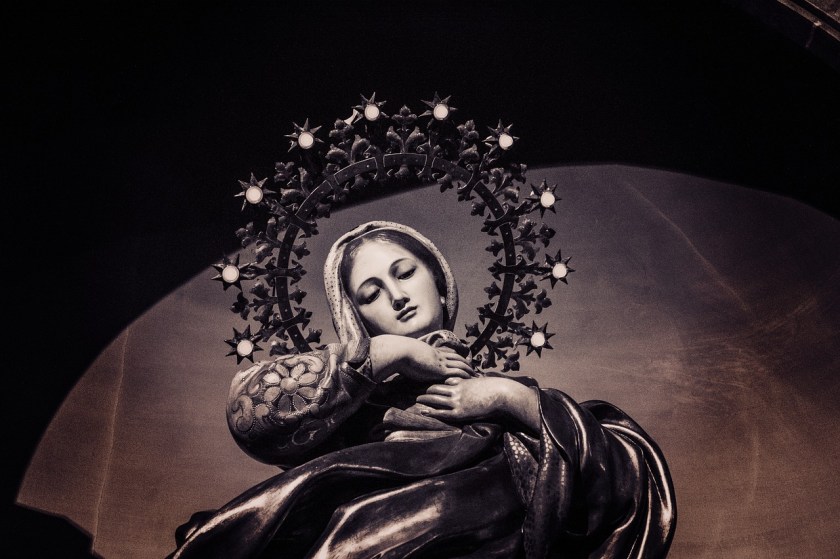
The most perfect creature that the Most High ever crafted is Jesus’s mother Mary. Not only was she conceived without the blemish of original sin, but she is the embodiment and epitome of love brought to fruition in a living person’s heart.  No person can love more than our Blessed Mary, the Mother of God.  No human being can be closer to our Creator’s eternal plan for mankind than Mary, the Queen of Peace, the Mirror of Justice, the Seat of Wisdom.

When it became known to Archangel Gabriel that Mary had acquiesced to give birth to the Son of Man, she did so willingly, conjoining her spirit with God’s providence – exclaiming that the redemption of the world be done according to His design. She understood what Jesus, her son of blood and flesh, would have to endure.  She knew that his mission included pain, betrayal and crucifixion, before the power of the resurrection would break the chains of sin and death.  It was revealed to her that God loved the world so much that he was willing to sacrifice his only begotten Son to pay for the debts of every person’s soul. So that eternity could be earned and enjoyed by all people of good faith and righteousness. The Mother of God, when accepting her role as co-redemptrix, knew perfectly well what would await her on the path to Calvary and at the place named Golgotha – and yet she did not shy away from this most sorrowful mission, because she knew that she was to bring, together with her Son, eternal life to people who have forsaken it.

How could she have done this?  Is such an engagement not beyond anybody’s capacity to comprehend?  After all, Mary was no different from any of us; she also was born into this world like everybody else – except, of course, without the burden of original sin.  Was this the critical difference – being able and willing, in a state of perfection, to discern and to follow the will of God?  Perhaps.  What is striking is the paramount force of goodness that radiates from Mary’s heart and lets her embrace any sacrifice, as long as the offering is pleasing to the Almighty.  Nothing is beyond comprehension, if it helps to bring forth life – every form of suffering is welcome, as long as the fruits of love, embracing humanity, pave the way to eternity.

Only because Mary loved with such intensity, was she able to bring the Redeemer to a suffering world; to raise and teach him with motherly care; and to prepare her Son to sacrifice everything for the salvation of mankind. Had her love been temporary, partial or wavering, she could not have accompanied Jesus to his torment on the cross.  She would, indeed, have tried to save him and to succeed in overcoming the snares of human falsehood.  But the Mother of God, who became our spiritual mother as a parting gift from her Son, saw beyond her pain and inner affliction when she stood by Jesus in fulfilling God’s master plan.  During her stations of the cross, she shed countless tears to ‘save all her children’ from eternal condemnation – and could only achieve that by possessing the strength of unconditional, all-engulfing love that makes up every fiber of her brilliant being.

Our Heavenly Mother is in a state of grace, because she is – as Virgin most faithful, merciful and venerable – full of divine love. Our Holy Mother of God is the Ark of the Covenant, the Tower of David and the Gate of Heaven, because she is most pure, chaste and undefiled.  As the cause of our joy, she contemplates the goodness of our Savior in her heart, prepared to always give good counsel and to fulfil God’s mission with sincere humility and thankfulness.  Mary is thus rightfully called “immaculate”, for nothing in her being touches imperfection – instead, everything is made of glittering splendor:  her thoughts, her prayers and humble devotion to a cause of limitless importance.

The Queen of prophets, apostles, and martyrs is the help of all Christians, and the handmaid of Christ’s mystical body, the Holy Mother Church. The Queen of Saints teaches us how to follow Jesus in our attempt to reach personal sainthood.  The Queen of the most holy Rosary invites us to draw ever closer to God in our prayer and contemplative adoration.

There is nothing that Mary does not or cannot do. She intervenes for her children before the throne of the Holy Trinity; she blesses the world with her motherly love and intercedes for souls which are in dire need of God’s mercy.  She tries, unceasingly, to save all of her children from destruction and death.  Her blueprint is Jesus’s will.  Therefore, her sight is breathtakingly beautiful, because it is the image of perfect love, of wisdom most profound and of righteousness supreme.

The Essence of Love

In today’s day and age it is, admittedly, difficult to discern the core meaning of love.  It appears that there are as many definitions of the essence of love as there are people explaining its content.

Often times no clear boundaries exist between various phenomena linked to the term – there seems, for instance, insufficient distinction between the concept of infatuation and, on the other hand, living a life of compassion; between physical and emotional attraction of the moment and unconditional acceptance of another person during a long life of fidelity; between corporal love, drawn to pleasure, and a spiritual state of mind that never seeks its own.

Love is, indeed, the most powerful force in the universe. Nothing can compete with it, because love is eternal.  In the realm of earthly existence, hatred may seem equally strong, at times perhaps even more invasive, if we look at the destructive power of wrongdoing that human behavior can cause.  Yet while hatred permeates all societies and has the capacity to linger on, to mutate – and by doing so remaining indestructible in this world, it does eventually come to a halt.

Jesus conquered death, and by extension all forms of evil. At the end of time, so is His promise, hate will dissipate, and death will be put to rest. In Heaven’s homestead, there will be no more hatred corrupting people, but there will be eternal love, freedom and wisdom instead.  Thus, love is supreme, because by its core quality it sustains life through offering and humility, through charity and forgiveness.

In a promiscuous society, sex is mistaken for love – or love for sex, promulgating that corporal pleasure is the highest degree of love manifested. Yet sex, as pleasure of the flesh, is often self-centered and rude, found in pre- or extramarital affairs, among people of the same gender, or as a mechanism of bodily grandeur rather than an act of unselfish giving embedded in the sacramental union of a married couple.  There can be no fruitfulness of corporal love if both husband and wife are not open to life during their intimate encounter, allowing God to bestow His eternal blessing on them.

Only in this elated context then it is that corporal love meets the standard of true love as envisioned by our Creator – in all other instances sexual pleasure remains barren, unfulfilling and unqualified to build lasting bonds of life.

Another angle needs to be explored as well: there are those among us who wish to live a life of chastity. But neither are they robbed of the experience of love, nor are they limited in their spiritual faculty to generate, convey and fortify affection.  Love must then possess other criteria by which it is identified and recognized as the most powerful force in the universe.

The essence of love is, indeed, hidden to the human eye. We can only experience it in our heart as we set out to emulate Jesus.  It is not as much an act of emotion, but rather an act of mind and will.  St. Paul’s all-encompassing definition of love in his first letter to the Corinthians says it succinctly: love is patient and kind, never jealous, boastful, conceited or rude.  It never takes offense or stores up grievances.  It does not rejoice at wrongdoing but finds its joy in the truth.  It is always ready to make allowances, to trust, to hope and to endure.

Love is then our determination, our steadfast will to walk in the footsteps of goodness, cheerfulness and God-centeredness. It is our conscientious decision to reach out, to lift our brothers and sisters up, assisting wherever we may find dire souls, and doing so without the thought of recompense.  It further means consoling people heavily inflicted by the wounds of this world, providing – in abundance – friendship, kindness, charity and peace.

All that is required from us is a proper disposition, while advocating the truth. All that we need to do as Christians is to confront ignorance and coldness of heart with brotherly compassion.  When we are capable to elevate any discourse to a level of dignified interaction, we know that we are on the right path.  After all:  where God is present, love is present.  And where there is love, we are embraced by the Holy Spirit of the Most High.
What Makes for a Good Christian?

It has been attested to by scholars of Christian belief that there are five predominant qualities in the make-up of an exemplary follower of Christ. These virtues are: faith, love, hope, humility and obedience to the will of God.  Any person exemplifying such pattern of inner disposition and behavior will not fail in living a life according to the will of Heaven.
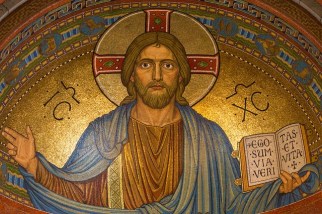
For if we have faith, we entrust our life to Jesus and are willing to walk in his footsteps when carrying our cross of earthly suffering. When still among us, Jesus deplored his fellow men to do as the Master does; to embrace our daily pain and to fully trust in God’s eternal providence that everything we are destined to endure is for our good, and a higher good.

Love is important in and of itself. For if we possessed all other qualities and virtues, yet did not have love, what good would ensue?  Who could possibly benefit from offerings made without compassion, from acts missing empathy, charity or the power of forgiveness?   Even though any such gift provided might generally be appreciated by the receiver, if love was absent the undertaking would lack a most necessary spiritual ingredient – namely Heaven’s blessing, which makes the endeavor complete.

Hope is the desire to endure and to never give up on God’s word, the teachings of His Church and the many manifestations of the splendid work of the Holy Spirit who inspires us to unceasingly search for the innermost Truth. Had we no hope, we would fail in this important quest, for there would be no string of attempts to overcome impasses, mental roadblocks, and distractions of forces of evil.  We would, at one point, simply quit and give up on our responsibility to steadily grow as Christians in attempting to understand the desire of God.

Humility is the prerequisite to hear the Almighty, to discern His will and to cleanse ourselves of pride and self-grandeur. Nothing can be achieved in our spiritual development if we hold on to a vision of self-centeredness and misunderstood personal importance.  For in our relationship with God we are totally dependent and weak.  We have no power to decide the beginning of our life, nor can we determine the date and time of our natural death.  Without God’s cleansing power through the sacrament of penance we could not successfully overcome the weakening force of original sin, making up every person’s human condition.  Indeed, the only strength we possess is to fully love our Creator for all His wondrous deeds and to praise Him – by our works– wholeheartedly.  Such praise is impossible if it does not emerge from a humble heart.

Finally, a good Christian needs to be obedient to the command of God. One thing is to understand Heaven’s will, another to live by it and to ask that it becomes our roadmap to eternity.  As long as we do not ask the Almighty to be cleansed by His will, we cannot close the circle of spiritual wholeness in what is an inherently imperfect state of soul.  Personal holiness – our greatest possible achievement as humans – requires that all of the above elements are incorporated in our desire to please God, so that we can be rightfully called His faithful children while living our earthly existence – and be named the chosen heirs of Heaven’s age to come.

The Rational Choice Is to Believe

Many compatriots will argue, especially those scientifically inclined, that believing in a higher being is irrational, for there is no proof of the existence of the Almighty. According to them, any person’s conviction to subscribe to creationism seems – in the absence of certainty – at best foolish, at worst misguided and dangerous to the human condition.  But as much as God’s existence cannot be empirically proven (the evidence remains circumstantial), it is – likewise – impossible to deny it.  All the books written throughout history rejecting the existence of the Most High have namely failed to provide conclusive proof of the absence of God, however forceful and repetitive the attempt in doing so.

Believing, as we know, requires at its core a person’s trusting disposition, which cannot feed on certitude, but on the assumption that God’s word is truthful, nurturing and, indeed, eternal. The power of the Gospel attests to this, obviously in the opinion of people who are capable in discerning the voice of God speaking through the Holy Scriptures.  Many people, on the other hand, hear little or nothing when reading the Bible, for they have not been given the gift of faith.  This does not make them less worthy; it only means that their journey in life is different and that also they will receive God’s precious gift of belief once they are ready to ask for it.  The Heavenly Father never turns away from his children imploring help, as long as their requests spring forth from a heart most sincere, humble and contrite.

In our times the number of people not believing in God is, unfortunately, growing. They build their present and future on personal insight, without reaching out to Heaven’s wisdom.  They feel comfortable in mastering the difficulties of the world relying on their strength, power and ingenuity.  Why to have a communion with God, they keep asking themselves, if there is no pressing need, especially if His commandments come with many – also unwanted – restrictions?  As long as we live, they seem to tell the world, we do not want the freedom to choose God, but the freedom from God.  Thus, any interference in handling earthly affairs is rejected.

Arguments like these may seem persuasive, yet in the final analysis they lack rationality, while pretending to deliver it. Let’s make the following assumption: a person lives without faith, yet upon death realizes that God exists.  How great is then the disappointment and misfortune, for if that person lived a life of faith, eternity could have been earned, instead having to depend now on God’s mercy as a last beacon of hope.

The second scenario is reverse: a person lives a faithful life, yet upon death realizes that there is no God.  What is the eternal burden for any such individual if there is no eternity?  No such pain can exist, for there is nothing.  Yet a life lived righteously, according to the word of assumed Wisdom, provides happiness and inner peace during a person’s earthly existence.  Anyone firmly rooted in the teachings of Christ, while on this planet, radiates joy and brings good things to life, even if God’s kingdom were to be non-existent; because Christ’s dogma is built on love and forgiveness, which is a recipe infinitely more powerful than any human right’s charter ever designed by secular minds.

In these times we like to see ourselves as intellectual beings, thus we must declare that the rational choice is to believe in God. No harm can come from it, even if He were mere fiction, because we would live by rules of goodness established millennia ago; yet there is tremendous pain if His existence is proven after we would have failed to recognize this when alive.  In the first instance, we are guaranteed to live a better, more fulfilling life, providing consolation and hope to ourselves and people around us, while in the second we may have just lost a pass to Heaven.

Given the above choices, who is then a man of reason? An atheist, who rejects God, only to find out that his life may have been built on self-inflicted deception (paving the way to eternal damnation), or a God-fearing soul living an exemplary life, and by doing so creating a world of harmony and peace, even if this very same world were – at one point – to end in nothingness?  The answer does not require much thought, nor do we need clarifying deliberation.  It is self-explanatory to every human heart searching for the innermost truth.  Once we are, accompanied by grace, fully immersed in the knowledge of the Unseen, there can be only one piercing exclamation: God is!

What Would Jesus Do?

If Jesus were alive today, how would He react to the world’s many apparent, festering and stubborn problems, to political crises, or even to cataclysmic developments? Would the Son of Man side with the powerful, if they were known as being righteous, or with the oppressed, even if they abandoned His teachings? Would He proclaim that suffering is to be endured, even in the face of unspeakable injustice, or would He support the will of many to rise up, if and when the glory of God is called into question by malice and indignity?



How would Jesus propose we solve the global refugee crisis, the arms race, economic inequality, the enslavement of millions of people around the globe? Would He offer a new blueprint for universal freedom and peace; a new magna carta for all of mankind which to draw from?

Some 2000 years ago Jesus made public, confirmed by His suffering and death on the cross, what people of all ages needed to know. His covenant was then proclaimed as new and final, for every generation to abide by until the end of time.  Nothing more is to be added, for everything has been said, laid open, and declared.

According to God’s eternal law, we humans must love and forgive. We must take care of those in need, the sick, and the poor.  It is our obligation to radiate goodness and stand up for equality, justice, and all the freedoms people need to have to live a worthy life.  We cannot be selfish and ignorant to the sufferings of our brothers and sisters, for our role as Christians is to bring Christ to the world; to offer Jesus to those who turned away from God, have never known Him, or decided not to walk in His consoling presence.  Our faith requires deeds of charity, unselfishness and compassion.  All of that, and more, can be inferred from the Gospel, which is Jesus’s eternal roadmap for humanity.  It is our duty to act upon what has been revealed by God.

Many opinion leaders will argue that accepting the world’s developments as they unfold, without shaping them according to our will and values, testifies to naivety and the abandonment of own’s beliefs. They claim that we should charter a course of national strength, military might, and sustainable economic growth, irrespective of how the global landscape develops elsewhere.  Then there are those who want the world to unite behind one political system and body of governance, so that their grip on power is fortified for all times to come.  They reject the teachings of the Son of Man, for they do not want any part in His glorious redemption.  They see our planet as a finite place of being, hence their animosity to everything that reminds them of the transcending works of Heaven.

Are those correct who say that we are responsible to keep our Christian heritage alive, and that we cannot give up on traditional values, regardless of any coercive attempts made by the modern world? And that Jesus himself, if He were physically present today, would not take the position of eradicating injustice, if this meant new injustice were to take hold?

Again, based on the Bible, we are safe to assume that Jesus would, in trying to overcome global problems, adopt a policy of righteous inclusiveness. He would – as an example – speak out against any military build-up anywhere on the planet; but would He condemn those who prepare for self-defense? Protecting life is not against His covenant.  He would, likewise, ask to have compassion for refugees; but would He understand those who claim that the demolition of Christian life must not be offered on the altar of expanding someone else’s religion?  We can assume that He would want us to promote a life of community and unity, without giving up on God-centeredness.

So, speaking the truth is, indeed, important – and liberating. What matters is that we are, as disciples of God, steadfast in our faith while protecting the heritage of the Church.  It might seem that these two demands are mutually exclusive, but in reality, they promote and foster each other.  For doing the will of God means that we are protecting what has been handed down to all generations by Jesus Christ.  In other words: we are not reliable guardians of our Christian faith, if we allow ourselves to be stripped of our Christian identity in the name of appeasement and false humility.  We must always help to build a better world, but not at the expense of our endangerment as Christians.

How to Love Jesus?

Enshrined in his majestic glory of love, wisdom and mercy, God remains invisible. We cannot see Him face to face, for human eyes could not bear the splendor of His radiant beauty.  We would die a sudden death if confronted with the holiness of His being, the perfection of His soul and the infallibility of His spirit.  Unless we are in a glorified state of existence, in other words, after having left our earthly body and having been remodeled to fit celestial design, God is hidden from our sight, and we can only experience Him spiritually.

This is why we have and why we need faith. Faith in His “’true and physical existence”, which will be proven – for all to experience – at the end of times; when everything will be made anew and when God’s children will inhabit heaven, the new city on the mountaintop.

To prepare for a jubilant encounter with God, face to face, we must pay attention to the commandments given to us by the Son of Man, Jesus Christ, our Savior and Redeemer. Fulfilling them must be our daily concern and preoccupation, for this is proof of our love for God, of our utmost sincerity and authenticity.

We love Jesus best when we adhere to His teachings, when we emulate His holiness, His compassion for sinners, and His mandate to forgive transgressions in its many forms and manifestations. We love Jesus best when we act as disciples of good will; when we are living conduits of love and charity, of unselfish wisdom and profound counsel, and when we honor heaven’s laws of justice and righteousness.

The Bible teaches us that we shall have no other God; that we shall not take the name of the Lord in vain, and that we must remember to keep holy the Sabbath day. Without honoring our father and mother, we cannot expect to live a harmonious life.  If it is our desire to grow in virtuousness, we shall not kill, nor commit adultery or steal.  If we want to be called faithful children of God, we shall not bear false witness against our neighbor, nor shall we covet our neighbor’s spouse or goods.  All commandments, as laid down by Jesus, are a blueprint for individual happiness and for the freedom of a person’s soul.

We cannot experience inner peace and be immersed in God’s infinite wisdom, if we oppose the doctrines of heaven, if we solely adhere to society’s rules and regulations governing life. These rules are designed to regulate social behavior and political discourse, economic activity and human rights.  But they fall short in governing matters of love and acceptance, of human dignity and goodness, of forgiveness undeservingly granted.  This, however, is precisely what Jesus wants us to do:  his wish is that we bring peace to the afflicted, healing to the wounded, and change the world through personal holiness.

As we are prepared to embark on our path of holiness, there will be no more questions as to how to love Jesus. We will know then, by His Holy Grace, that our love is genuine and insurmountable – as we invest all our heart, mind and soul into His redeeming enterprise.

Christ is Risen!

The mystery of Easter is Christ’s resurrection. Without the risen Lord, our faith would be meaningless, for there would be nothing to proclaim, nothing to believe in.  If Christ had not risen from the dead, the teaching of the Catholic Church would be robbed of its essential truth – that by Jesus’s unselfish offering every human being can attain eternal life.  If Christ did not conquer death, everlasting life could not be passed on to men made in the image and likeness of God.

The story of Jesus Christ is, indeed, unparalleled. No human being has ever been able to overcome death.  Only Jesus could transcend death due to his divine spirit, allowing the Eternal word to become flesh and, by doing so, to attest for eternity.  If Christ had died without subsequent resurrection, his story, however impressive, would have remained a footnote in the tales of history and in the collective memory of mankind.  Yet the mere fact that his Church has thrived throughout the ages, beset by countless trials and tribulations, is a testament to its authenticity, truthfulness, and mystical presence of God.  Christ’s body and blood, soul and divinity, are the fountain of spiritual life manifested in the sacrament of the Eucharist.  It is the Holy Communion and other sacraments of the Catholic Church that shield it from misery, destruction, and oblivion.

Had Christ not risen from the dead, there would be no disciples, nor followers, who – initially insignificant – grew steadily in number to become a universal force of believers. Who would be prepared to lay down his life for a man, claimed to have been the Redeemer, if his agenda was a fiction?  Throughout history more than 40 million people, many willingly, drank the cup of martyrdom.  Every stone of St. Peter’s, originally making up the walls of the Colosseum in Rome, was, quite literally, soaked in blood of innocent Christians from the early Church.  The waves of initial persecution lasted more than 300 years, until the Catholic Church gained official recognition in the Roman Empire.  Would Michelangelo have been able to paint the Sistine Chapel, or to breathe life into what later became his grand Pieta, if he did not believe in the resurrected Lord?  Would Mozart’s Requiem or Handel’s Messiah become possible without insight, without knowledge from the Holy Spirit that Christ is the Truth Incarnate?

Would ordinary men, ever since the establishment of the Catholic Church, want to become priests to take up the cross of Jesus? Would countless members of religious orders offer their lives for God’s word in their vocation to transform the face of the earth?  None of that would become reality, if Christ did not conquer death.  For this very reason, Easter is and always will be the point in time of our salvation and the beginning of our sincere willingness to glorify God in his only begotten son and our Lord Jesus, the Risen Christ.

In the Absence of God

When there is no Divinity guiding a human being in its three main aspects of mind, body and soul, the transcending power of eternal wisdom does not interfere in our lives. We are left to our own limited devices and free will, which functions on subjective insight and memory. As imperfect creatures, we are likely to make continuous mistakes based on our weak human nature. In addition, we are exposed to the snares of the devil and his legions of many throughout our earthly existence.

Individuals, families and nations which abandon God are doing themselves a huge disservice. You can only live a truly harmonious and fruitful life, if God and all the blessings of the Holy Spirit are embraced. Conversely, God’s absence in a person’s life causes emptiness and misguidance. If you give up on God and deny His existence, no true and lasting prosperity is possible.  Instead, many rifts and personal vices will appear in your life.

The biggest surprise, however, is that even if you give up on the Creator, Savior, and Redeemer, He will never give up on you or stop loving you! He will fight for your eternal soul until your last breath. Our Christian God is a God of love, accepting every human being’s free will, yet hoping for a conversion of heart, if necessary, until the moment of death.

Take a look at the United States in this day and age. “In God we trust” is being propagated, yet if this were so, God’s commandments would be respected. There would be no child and adult pornography on the internet and other media outlets, there would be no legalized and government funded abortion, there would be a healthcare system equitable and fair for all, there would be no idolatry of wealth, riches and success, but rather the focus on a culture of life where true virtues of goodness are celebrated. We would want to teach our children eternal truths, firmly embedded in the proclamations of the Church. We would want to stand up against divorce, adultery, sex trafficking, the misuse of drugs and alcohol, and all other human trappings, which have no intrinsic value, but are designed to corrupt people.

How can you then live a holy life, in which decisions will withstand the test of time and deliver splendid results?  There is only one firm path – allowing Christ to become the shepherd of your soul, the gatekeeper of your body, the steward of your spirit.

The fact that America has so many social, political, economic, but foremost moral problems shows that the country has – to a significant extent – turned away from God. In His absence, there is uncertainty, chaos, confusion and unease.  The odor of hatred and war is permeating today’s modern world, since the faith in the Eternal Truth has been replaced by a culture of death, in which the devil unceasingly attempts to destroy western civilization, built on Christianity and radiant human condition.